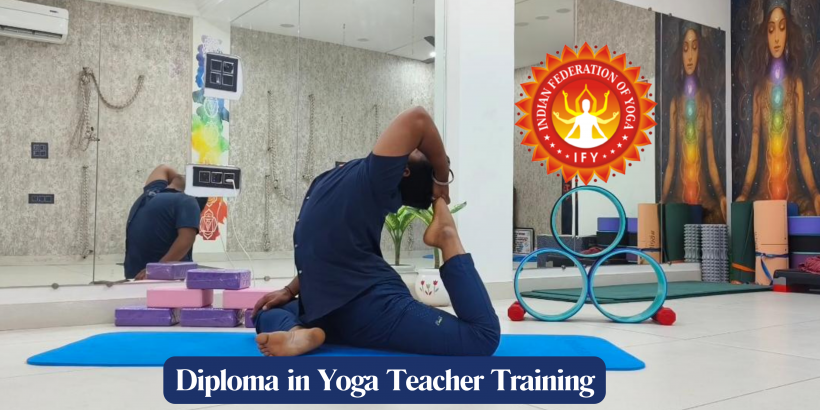

Diploma in Yoga Teacher Training in Delhi
1-Year Diploma in Yoga Teacher Training – Online & Offline
Introduction to the Course
The Diploma in Yoga at the Indian Federation of Yoga is a comprehensive, professionally structured training program designed to equip aspiring instructors, practitioners, and wellness enthusiasts with deep theoretical knowledge and practical mastery. Rooted in authentic traditions and aligned with modern fitness and health standards, this course prepares you to lead safe, effective, and transformative yoga sessions across various professional settings.
Course Duration and Structure
- Duration: 12 Months (1 Full Year)
- Modes Available: Offline (classroom-based), Online Live Interactive, or Hybrid (combination of both)
- Certification: Diploma in Yoga Teacher Training awarded by the Indian Federation of Yoga (IFY)
- Level: Advanced (builds upon basic or intermediate practice)
- Batch Schedule: Admissions open year-round. Main batches typically commence in January and July. Weekday (morning/evening) and weekend batches are available.
- Commitment: Regular daily/weekly practice sessions, theory classes, self-study, assignments, teaching practicum, and assessments.
The program is structured progressively: initial months focus on building a strong personal foundation in practice and philosophy, middle months deepen knowledge of anatomy, therapy, and scriptures, and the final phase emphasizes teaching skills, practicum, and professional readiness.
Eligibility Criteria
- Minimum educational qualification: 12th Pass (or equivalent) from a recognized board.
- Basic knowledge or interest in yoga is recommended but not mandatory.
- Candidates must be physically and mentally fit to undertake daily rigorous yoga practice, including asanas, pranayama, and cleansing techniques.
- No upper age limit — the course welcomes sincere learners of all ages who are committed to personal and professional growth.
Who Should Enroll in This Program?
This diploma is thoughtfully designed for a diverse range of participants:
- Students who have completed 12th grade and are looking for a meaningful, skill-oriented professional course.
- Aspiring yoga teachers who want to build a full-time or part-time career in the wellness industry.
- Existing yoga instructors or trainers seeking deeper knowledge, advanced certification, and refined teaching skills.
- Health and wellness professionals such as physiotherapists, fitness trainers, nutritionists, and coaches who wish to integrate yoga into their practice.
- Serious yoga practitioners who desire personal transformation, spiritual growth, and the ability to share yoga authentically with others.
- Individuals looking to manage lifestyle disorders through yoga or pursue further studies like PG Diploma or M.Sc. in Yoga.
Key Highlights of the Program
- Rigorous training rooted in authentic traditional Indian yoga systems.
- Strong emphasis on therapeutic yoga and disease management.
- Comprehensive coverage of classical texts (Patanjali Yoga Sutras, Bhagavad Gita, Hatha Yoga Pradipika, etc.).
- Extensive teaching practicum with hands-on adjustments, sequencing, and class management.
- Integration of Ayurveda, Naturopathy, and Yogic Lifestyle principles.
- Flexible learning options to suit working professionals and students.
- Focus on ethics, professionalism, and service-oriented teaching.
- Supportive faculty led by experienced yoga experts, including founder Neeru Batra.
Detailed Syllabus with In-Depth Descriptions
1. Sukshma Vyayama (Subtle Body Warm-Ups and Joint Movements)
Sukshma Vyayama forms the foundation of any safe and effective yoga session. These gentle, preparatory movements lubricate the joints, improve circulation, release muscular tension, and prepare the body and mind for deeper asana practice. Practices include: Neck rolls, shoulder shrugs and rotations, wrist and ankle movements, spinal twists, side bends, forward and backward bends, and coordinated arm and leg movements. Students learn how to sequence these for different age groups and fitness levels.
2. Asanas (Yoga Postures) – Detailed Practice and Benefits
The course covers hundreds of variations across all categories, with emphasis on proper alignment, modifications, contraindications, and therapeutic benefits.
- Standing Postures: Tadasana (Mountain Pose) for grounding and posture awareness, Vriksasana (Tree Pose) for balance and focus, Hasta Uttanasana, Padahastasana, Trikonasana (Triangle Pose) for lateral stretch and digestion, Virabhadrasana I, II & III (Warrior poses) for strength and confidence, Garudasana (Eagle Pose), Utkatasana (Chair Pose), Chakrasana (Wheel Pose) for spinal flexibility, and Natarajasana (Dancer’s Pose) for grace and concentration.
- Sitting Postures: Vajrasana and Bhadrasana for digestion and meditation readiness, Parvatasana, Gomukhasana, Janushirasana, Vakrasana and Ardha Matsyendrasana for spinal twisting and detoxification, Paschimottanasana for posterior stretch, Supta Vajrasana, Yoga Mudra, Ushtrasana (Camel Pose), Mandukasana, and Mayurasana (Peacock Pose) for core strength and advanced balance.
- Supine (Lying on Back) Postures: Shavasana for complete relaxation, Ardha Halasana and full Halasana (Plough Pose), Pawan Muktasana series for gas relief and abdominal health, Setu Bandhasana (Bridge Pose) for spinal health, Uttana Padasana, Naukasana (Boat Pose) for core power, Matsyasana (Fish Pose), Sarvangasana (Shoulder Stand) for thyroid regulation and inversion benefits, and Viparita Karani.
- Prone (Lying on Stomach) Postures: Makarasana for relaxation, Marjari Asana (Cat-Cow), Bhujangasana (Cobra Pose) for back strengthening, Shalabhasana variations, Dhanurasana (Bow Pose) for full spinal extension, and others.
- Meditative Postures: Swastikasana, Samasana, Padmasana (Lotus Pose), and Siddhasana — essential for pranayama and meditation practice.
Students learn benefits, modifications for injuries, use of props, and how to guide students safely.
3. Pranayama (Breathing Techniques)
Breath is the bridge between body and mind. The course covers foundational to advanced techniques: Bhastrika (energizing bellows breath), Anuloma Viloma / Nadi Shodhana (alternate nostril breathing for nervous system balance), Ujjayi (victorious breath for focus), Suryabhedana and Chandrabhedana, Shitali and Sitkari (cooling breaths), Bhramari (humming bee breath for calming the mind), and more. Emphasis is placed on correct ratio (Puraka, Kumbhaka, Rechaka), bandhas during practice, and therapeutic applications.
4. Mudras and Bandhas
Mudras (hand gestures) like Brahma Mudra and Simha Mudra channel energy. Bandhas (energy locks) — Jivha, Mula, Jalandhara, Uddiyana (internal and external) — are taught in detail for pranic control, stability in asanas, and deepening meditation.
5. Dhyana (Meditation) and Yoga Nidra
Various meditation techniques: Dynamic Meditation, Zen, Vipassana, Chakra Meditation, Kriya Yoga, Deha Dharana, and Prana Dharana. Yoga Nidra (yogic sleep) is practiced extensively for deep relaxation, stress relief, and subconscious reprogramming.
6. Shatkarmas (Six Cleansing Practices)
Traditional detoxification techniques: Neti (nasal cleansing), Dhauti, Nauli, Basti, Trataka (gazing), Kapalabhati, and Vamana. These purify the body and prepare it for higher practices.
7. Yoga Philosophy and Classical Scriptures (In-Depth Study)
Patanjali Yoga Sutras (All 4 Chapters):
- Chapter 1: Definition of Yoga, Chitta Vrittis, Chitta Prasadana.
- Chapter 2: Kriya Yoga, Pancha Kleshas.
- Chapter 3: Ashtanga Yoga (Yama, Niyama, Asana, Pranayama, Pratyahara, Dharana, Dhyana, Samadhi).
- Chapter 4: Siddhis, Purusha-Prakriti, Kaivalya.
Bhagavad Gita: Detailed exploration of Karma Yoga, Bhakti Yoga, Jnana Yoga, Sankhya Yoga, and the yogic essence of duty and detachment.
Hatha Yoga Pradipika, Gheranda Samhita, Shiva Samhita: Classical explanations of asanas, pranayama, mudras, bandhas, kriyas, and paths to Samadhi.
8. Human Anatomy and Physiology
In-depth study of Muscular, Skeletal, Digestive, Respiratory, and other systems. Students understand how specific yoga practices positively influence each system and learn to apply this knowledge in therapeutic contexts.
9. Yoga Therapy and Disease Management
Basics of yoga therapy for common lifestyle disorders: Diabetes, Hypertension, Obesity, Migraine, Depression, PCOD/PCOS, and more. Students learn sequencing for specific conditions, precautions, and holistic healing approaches.
10. Teaching Methodology and Professional Ethics
- Structuring classes for beginners to advanced levels.
- Communication skills, handling diverse students, giving constructive feedback.
- Hands-on adjustments, use of props, sequencing, theme-based classes.
- Extensive teaching practicum, peer teaching, self-evaluation, and real-class experience.
- Code of conduct, ethical principles, and the responsibilities of a yoga teacher.
11. Yogic Lifestyle and Ayurveda Basics
- Sattvic diet, Dinacharya (daily routine), Ritucharya (seasonal routine).
- Principles of Ayurveda, Naturopathy, Pancha Koshas, and healing techniques.
- Detox plans and integration of Ayurveda with yoga for complete wellness.
Teaching Practicum and Assessment
A major highlight is the hands-on teaching practice. Students conduct classes under supervision, receive detailed feedback, and build portfolios. Continuous assessment through practical exams, theory tests, assignments, and final teaching demonstration ensures comprehensive evaluation.
Career Opportunities After Completion
Graduates receive a recognized Diploma that opens doors to:
- Teaching in yoga studios, wellness centers, gyms, schools, colleges, and corporate wellness programs.
- Working as a yoga therapist (with further specialization).
- Conducting workshops, retreats, teacher training modules, and online classes.
- Pursuing higher studies (PG Diploma in Yoga, M.Sc. Yoga, etc.).
- Building an independent career as a certified yoga professional nationally and internationally.
Flexible Learning and Admissions
The program offers weekday, weekend, online live, and hybrid options to accommodate different schedules. Admissions are open throughout the year. Early registration is recommended for preferred batches.
How to Apply (Step-by-Step):
- Visit the official website: https://indianfederationyoga.org
- Navigate to the Diploma in Yoga Teacher Training page.
- Fill the online Student Registration Form.
- Contact the team (+91 9999 135 155 or ify.directors@gmail.com) for batch details, fees, and queries.
- Complete the enrollment process and begin your transformative journey.
Vision, Objective, and Dedication
The Indian Federation of Yoga aims to create competent, skilled yoga professionals who serve humanity with dedication and authenticity. The vision is to promote health, wealth, and prosperity through quality yoga and Ayurveda education, making India a global hub of wellness.
This 1-year Diploma in Yoga Teacher Training is a complete, life-changing program that combines rigorous practice, profound knowledge, and professional skills. It equips you not only to teach yoga but to embody its principles in every aspect of life.
For the most updated batch details, fees structure, or personalized guidance, reach out to the Indian Federation of Yoga directly.
Ready to transform your passion into a profession? Apply today and embark on this enriching journey toward becoming a certified, confident, and compassionate yoga teacher.
Certification: Students who successfully complete the required theory, practical and assessment components receive a Diploma/Certificate issued by Indian Federation of Yoga.
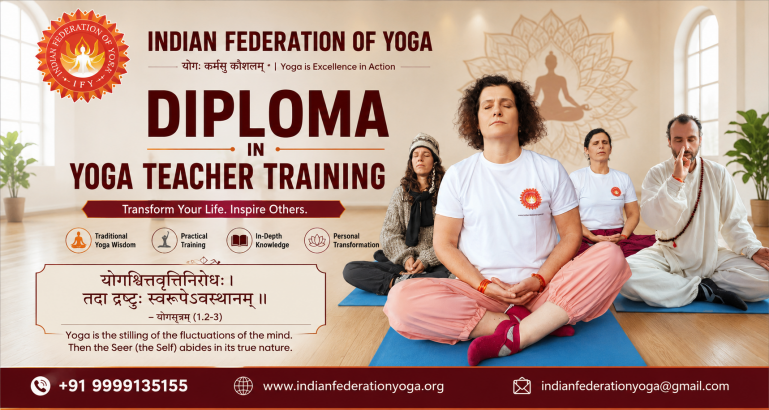
Foundation of Yoga
The Foundation of Yoga module serves as the entry point to your diploma journey, establishing a solid theoretical and historical grounding. This section connects students with the roots of the practice, ensuring that physical postures are understood within their original spiritual and philosophical contexts.
Core Topics Covered
- History & Evolution: Trace the origins of yoga from ancient Vedic traditions and the Indus Valley Civilization through the classical and medieval periods to modern global practices.
- Etymology & Definitions: Explore the literal meaning of the word "yoga" (to yoke or unite) across key classical texts and traditions.
- Schools of Yoga: Study the primary paths of traditional yoga, including Raja Yoga, Bhakti Yoga, Jnana Yoga, Karma Yoga, and Hatha Yoga.
- The Yogic Lifestyle: Understand core ethical concepts such as Dinacharya (daily routines) and basic lifestyle principles that support long-term physical and mental wellness.
- Modern Integration: Examine how ancient yogic principles adapt to contemporary health, fitness, and therapeutic frameworks.
Anatomy & Physiology
The Anatomy & Physiology module bridges traditional movement with modern scientific understanding. This section ensures that instructors can teach safely, tailor postures to different body types, and prevent injuries by understanding how the human body responds to movement.
Core Topics Covered
- Skeletal System & Alignment: Study bone structures, joint mechanics, and skeletal variations to understand structural limitations and proper alignment in asanas.
- Muscular System & Contraction: Learn how muscle groups engage, stretch, and stabilize the body during static holds and dynamic flows (concentric, eccentric, and isometric movements).
- Respiratory System & Mechanics: Examine the mechanics of breathing, diaphragm function, and how optimized breath control impacts cellular oxygenation and nervous system regulation.
- Nervous System & Mind-Body Connection: Explore the central and autonomic nervous systems, focusing on how yoga activates the parasympathetic nervous system (rest-and-digest) to reduce stress.
- Injury Prevention & Biomechanics: Understand common movement dysfunctions, joint vulnerabilities, and how to apply safe structural modifications for students with physical limitations.
Asanas
The Asanas module forms the practical core of your physical training, moving you from basic posture execution to advanced alignment mastery. This section ensures you can safely practice, analyze, and teach a wide variety of postures while accommodating different student abilities.
Core Topics Covered
- Classification of Postures: Master standing poses, seated postures, twists, backbends, forward folds, inversions, and balancing asanas.
- Structural Alignment & Biomechanics: Learn correct foundational alignment points, body lines of energy, and joint stacking to maximize benefits and prevent strain.
- Modifications & Props: Discover how to effectively utilize props like blocks, straps, bolsters, and chairs to support beginners, injured students, and advanced practitioners alike.
- Hands-on & Verbal Adjustments: Develop the ability to offer clear, precise verbal cues and safe manual assistance to help students deepen their expression of a pose.
- Contraindications: Identify specific health conditions, injuries, or limitations that make certain asanas unsafe, ensuring a secure environment for every participant.
“दूरेण ह्यवरं कर्म बुद्धियोगाद्धनञ्जय। बुद्धौ शरणमन्विच्छ कृपणाः फलहेतवः॥
योगिनामपि सर्वेषां मद्गतेनान्तरात्मना। श्रद्धावान्भजते यो मां स मे युक्ततमो मतः॥”
"Bhagavad Gita”
Pranayama & Kriyas
The Pranayama & Kriyas module focuses on the science of breath control and traditional internal cleansing techniques. This section teaches you how to harness vital life force energy (prana) and prepare the physical and subtle bodies for deeper meditation and spiritual awareness.
Core Topics Covered
- Anatomy of Breathing: Re-examine respiratory mechanics with a focus on optimal diaphragmatic breathing and maximizing lung capacity.
- Classical Pranayama Techniques: Master foundational breathwork practices such as Nadi Shodhana (Alternate Nostril Breathing), Ujjayi (Victorious Breath), Kapalabhati (Skull Shining Breath), Bhastrika (Bellows Breath), and Bhramari (Bee Breath).
- Bandhas & Energy Locks: Learn how to apply Uddiyana, Mula, and Jalandhara Bandha to direct and seal energy flow within the body.
- Yogic Cleansing (Shatkarmas): Understand the theory, practice, and safety guidelines for traditional purification techniques like Neti (nasal cleansing), Dhauti (stomach cleansing), and Tratak (concentration gazing).
- Energetic Pathways: Explore the concept of nadis (energy channels) and chakras (energy centers) and how breathwork influences the subtle body.
Meditation
The Meditation module shifts the focus from physical movement and breath control toward inner stillness and mental mastery. This section equips you with the tools to quiet the chatter of the mind, cultivate profound awareness, and guide students safely into meditative states.
Core Topics Covered
- The Spectrum of Awareness: Understand the progression from Dharana (concentration and single-pointed focus) to Dhyana (uninterrupted meditation) and Samadhi (absorption).
- Mindfulness & Presence: Learn practical techniques to anchor awareness in the present moment through breath, bodily sensations, and sensory observation.
- Guided Meditation Techniques: Master various styles including Vipassana, Trataka (gazing meditation), Mantra meditation, Chakra meditation, and Yoga Nidra (conscious deep relaxation).
- Nervous System Regulation: Explore how regular meditation shifts brainwave states, reduces cortisol, and builds long-term emotional resilience.
- Teaching & Holding Space: Develop the verbal cadence, pacing, and presence required to effectively lead groups through silent or guided meditation sessions.
Yoga Philosophy
The Yoga Philosophy module provides the intellectual and ethical backbone of your practice. Moving beyond physical exercise, this section explores the ancient texts, metaphysical frameworks, and moral guidelines that define the true essence of yoga as a complete way of life.
Core Topics Covered
- Patanjali’s Yoga Sutras: Study the foundational text of classical yoga, breaking down the Ashtanga (Eight-Limbs of Yoga) framework: Yama, Niyama, Asana, Pranayama, Pratyahara, Dharana, Dhyana, and Samadhi.
- The Bhagavad Gita: Explore essential concepts of duty (Dharma), selfless action (Karma Yoga), devotion (Bhakti Yoga), and knowledge (Jnana Yoga).
- The Koshas (Sheaths of Existence): Understand the five layers of human experience, ranging from the physical body (Annamaya Kosha) to the bliss body (Anandamaya Kosha).
- The Gunas: Examine the three fundamental qualities of nature—Sattva (purity/harmony), Rajas (activity/passion), and Tamas (inertia/darkness)—and how they influence human behavior and mental states.
- Ethics and Lifestyle: Learn how to integrate traditional philosophical principles into modern teaching ethics, personal discipline, and daily decision-making.
Yoga Applications
The Yoga Applications module bridges traditional practice with modern health and wellness needs. This section teaches you how to adapt and apply yogic tools therapeutically to support individuals with specific health conditions, lifestyle disorders, and physical limitations.
Core Topics Covered
- Therapeutic Yoga Adaptations: Learn how to modify asanas, breathing techniques, and relaxation practices for common lifestyle issues such as back pain, joint stiffness, posture imbalances, and chronic fatigue.
- Stress & Mental Health Management: Utilize targeted pranayama, restorative poses, and mindfulness practices to help manage anxiety, depression, and stress-related disorders.
- Specialized Demographics: Understand safety guidelines and tailored sequences for unique groups, including pre/postnatal women, seniors, and corporate professionals facing sedentary strain.
- Lifestyle & Preventive Care: Explore how daily yogic routines (Dinacharya) and dietary principles support long-term metabolic health and disease prevention.
- Client Assessment & Sequencing: Learn how to conduct basic wellness intakes, identify individual needs, and design progressive, safe therapeutic sequences.
Teaching Methodology
The Teaching Methodology module transforms your personal practice and theoretical knowledge into effective leadership. This section equips you with the practical communication skills, classroom management tools, and ethical guidelines needed to lead safe, engaging, and inspiring yoga classes.
Core Topics Covered
- Class Sequencing & Structure: Learn how to design balanced, progressive classes with appropriate warm-ups, peak poses, cool-downs, and final relaxation.
- Voice Modulation & Communication: Master clear verbal cues, tone, pacing, and confident public speaking to keep students focused and safe.
- Demonstration & Observation: Understand when and how to demonstrate postures effectively, and develop a sharp eye for observing student alignment and movement patterns in real-time.
- Classroom Management & Inclusion: Create a welcoming, inclusive space for diverse fitness levels, handling beginners alongside more experienced practitioners using smart modifications and props.
- Ethics of Teaching: Explore the professional responsibilities, boundaries, and code of conduct required to build a trusted relationship with your students.
Practical Training & Assessment at Indian Federation of Yoga
The Practical Training & Assessment module at the Indian Federation of Yoga ensures that every student transitions successfully from classroom learning to confident, real-world instruction. This rigorous evaluation phase combines hands-on teaching practice with comprehensive testing to validate your skills and readiness as a certified professional.
Core Components Covered
- Live Teaching Practice (Practicum): Lead live practice sessions under the direct observation and mentorship of senior instructors, receiving immediate feedback on your cueing, pacing, and presence.
- Peer Teaching & Classroom Simulation: Practice teaching your fellow students, learning how to manage diverse skill levels, handle room dynamics, and apply modifications on the fly.
- Practical Examination: Demonstrate your ability to execute and instruct specific asanas, lead pranayama sequences, and guide relaxation techniques accurately and safely.
- Written Theory Evaluation: Complete assessments covering anatomy, yoga philosophy, physiology, and teaching methodology to reinforce your foundational knowledge.
- Viva Voce (Oral Interview): Participate in a one-on-one discussion with senior faculty members to review your understanding, address any learning gaps, and finalize your certification readiness.
Career Opportunities After Diploma in Yoga
The Career Prospects module highlights the expanding professional avenues available upon completion of your diploma. With rising global awareness around preventive healthcare, mental wellness, and holistic living, a recognized certification positions you for diverse, rewarding roles across multiple sectors.
Core Career Pathways
- Yoga Instructor & Trainer: Lead group and individual classes in dedicated yoga studios, fitness centers, health clubs, and community centers, guiding practitioners through safe and structured routines.
- Corporate Wellness Consultant: Partner with corporate organizations to conduct stress-management workshops, ergonomic posture sessions, and desk-yoga programs for employees.
- Therapeutic Yoga Assistant: Work alongside healthcare professionals, physiotherapists, and wellness clinics to support lifestyle disease management and rehabilitation programs.
- Hospitality & Wellness Tourism: Secure roles in luxury resorts, wellness retreats, spas, and international holistic centers catering to health-conscious travelers.
- Educational Institutions: Teach yoga and physical wellness in schools, colleges, and specialized training academies.
- Independent Practice & Digital Entrepreneurship: Build your own brand as an independent coach, offering personalized private sessions, home training, or global virtual classes online.
Why Choose Indian Federation of Yoga?
Choosing where to pursue your diploma is the most important step in your professional journey. At the Indian Federation of Yoga, we combine authentic traditional wisdom with rigorous modern standards to ensure you graduate not just as a certified instructor, but as a confident, highly skilled professional ready to lead.
Core Advantages of Studying With Us
- Rooted Authenticity: Our curriculum stays true to classical yoga lineages, ensuring you learn deep traditional philosophies rather than just surface-level fitness trends.
- Expert Faculty & Mentorship: Learn directly from seasoned yoga masters and health professionals who provide personalized guidance, constructive feedback, and continuous support throughout your course.
- Comprehensive Practical Training: We emphasize real-world teaching experience through extensive practicum sessions, peer teaching, and live classroom simulations at our Mukherjee Nagar center.
- Flexible Learning Modes: Designed for diverse lifestyles, we offer both immersive offline studio classes and flexible online live interactive batches without compromising on quality.
- Recognized Certification: Earning your diploma under the banner of the Indian Federation of Yoga establishes immediate professional credibility and opens doors to wide-ranging career paths.
- Strategic Delhi Location: Conveniently located at 873, First Floor, Dr. Mukherjee Nagar, Delhi – 110009, our center is easily accessible with robust infrastructure for all students.
Admission Process
Joining the Diploma in Yoga program at the Indian Federation of Yoga is a straightforward, transparent process designed to welcome dedicated individuals who are ready to commit to authentic learning and professional growth.
Step-by-Step Admission Guide
- Application Submission: Submit your inquiry or application online through our website or visit our center directly at Dr. Mukherjee Nagar to register your interest.
- Eligibility Verification: Our admissions team will review your basic qualifications (ensuring you meet the 10+2 educational requirement or equivalent experience) and discuss your personal or professional goals in yoga.
- Batch Selection: Choose your preferred learning mode (Online Live Interactive or Offline Studio-based) and select your convenient batch timing from our available morning (6:00 AM – 12:00 PM) or evening (5:00 PM – 8:00 PM) slots.
- Fee Submission & Enrollment: Complete the registration and course fee payment to secure your seat in the upcoming batch.
- Welcome & Orientation: Receive your course materials, schedule details, and access links (for online students) prior to the official batch commencement.
Frequently Asked Questions – Diploma in Yoga in Delhi
1. What is a Diploma in Yoga?
A Diploma in Yoga is a comprehensive, structured professional training program designed to equip individuals with deep theoretical knowledge, philosophical grounding, and practical mastery of yoga. It covers everything from foundational history and anatomy to advanced asanas, pranayama, meditation, therapeutic applications, and teaching methodology, preparing graduates for professional careers in wellness and instruction.
2. What is the duration of the Diploma in Yoga in Delhi?
The duration of the Diploma in Yoga at our Delhi center is flexible, typically ranging from 6 months to 1 year depending on the batch intensity, schedule format (regular vs. weekend/part-time), and whether you choose online or offline learning paths.
3. What is the eligibility for a Diploma in Yoga?
The course is open to fitness enthusiasts, aspiring instructors, and individuals who have completed their higher secondary education (10+2) or equivalent from a recognized board, along with a genuine passion for yoga and holistic wellness.
4. Can I do a Diploma in Yoga after 12th?
Yes. Completing your higher secondary education (10+2) meets the baseline academic eligibility requirement for enrollment in our Diploma in Yoga program.
5. What is the fee for a Diploma in Yoga in Delhi?
Fee structures vary depending on the chosen learning mode (Online Live Interactive vs. Offline Studio-based) and payment structures. For the most up-to-date fee schedules, scholarship options, or installment details, please contact our admissions team directly or visit our center at 873, First Floor, Dr. Mukherjee Nagar, Delhi – 110009.
6. Is the Diploma in Yoga available online?
Yes. The program is available in both Online (Live Interactive) and Offline (Studio-based at Dr. Mukherjee Nagar, Delhi) formats, allowing students to learn remotely with real-time faculty engagement or in a traditional classroom environment.
7. Where is the Diploma in Yoga course conducted in Delhi?
Our offline classes and primary administrative center are conveniently located at 873, First Floor, Dr. Mukherjee Nagar, Delhi – 110009, featuring robust infrastructure designed for dedicated yoga practice and study.
8. What subjects are included in the Diploma in Yoga syllabus?
The comprehensive curriculum covers:
- Foundation of Yoga & History
- Anatomy & Physiology
- Asanas (Postures, Alignment & Adjustments)
- Pranayama & Kriyas (Breathwork & Cleansing)
- Meditation & Mindfulness
- Yoga Philosophy (Patanjali’s Yoga Sutras & Bhagavad Gita)
- Yoga Applications (Therapeutic & Lifestyle Adaptations)
- Teaching Methodology & Class Sequencing
- Practical Training & Assessment
9. Does the Diploma in Yoga include practical training?
Yes. Practical training is a core pillar of our curriculum. It includes live teaching practice (practicum), peer teaching simulations, classroom management training, structural alignment drills, and supervised hands-on instruction.
10. Can beginners join a Diploma in Yoga?
Yes. While a baseline familiarity with yoga is helpful, the course is structured to guide dedicated beginners from foundational principles up to professional teaching readiness, provided they meet the educational eligibility and possess a strong commitment to learning.
11. Can I become a yoga teacher after completing a Diploma in Yoga?
Absolutely. This diploma is specifically structured to prepare you for professional instruction, equipping you with the safety protocols, sequencing skills, and teaching methodology needed to lead classes confidently.
12. What are the career opportunities after a Diploma in Yoga?
Graduates can pursue diverse career paths, including:
- Professional Yoga Instructor in studios, fitness centers, and gyms
- Corporate Wellness Consultant for stress-management and desk-yoga programs
- Therapeutic Yoga Assistant working alongside wellness and healthcare professionals
- Instructor in luxury resorts, wellness retreats, and holistic tourism centers
- Physical wellness educator in schools or colleges
- Independent digital entrepreneur offering private sessions and online classes
13. What is the difference between a Diploma in Yoga and a 200-hour Yoga Teacher Training Course?
While both establish foundational teaching readiness, a Diploma in Yoga typically offers a more extended, comprehensive academic exploration—incorporating deeper studies in human anatomy, specialized yoga applications, therapeutic adaptations, and structured theoretical evaluations alongside practical hours.
14. Is the Diploma in Yoga recognized?
Yes. Earning your diploma under the banner of the Indian Federation of Yoga establishes strong professional credibility, validating your skills and training for employment across domestic and international fitness and wellness markets.
15. How can I apply for a Diploma in Yoga in Delhi?
You can apply by filling out our online inquiry form on our website or by visiting our center at 873, First Floor, Dr. Mukherjee Nagar, Delhi – 110009 to complete your eligibility verification, select your batch timing, and finalize your enrollment.

Your email address will not be published. Required fields are marked *
Send Your Query