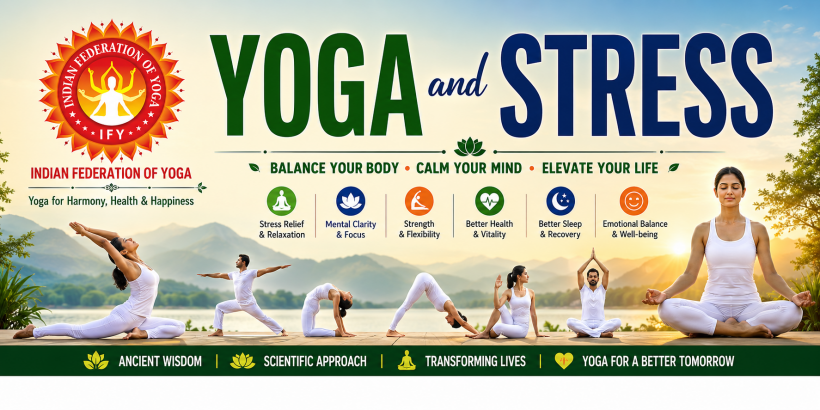
Yoga and Stress Relief: A Holistic Approach to Stress Management, Anxiety, Mental Wellness and Inner Peace
In today’s fast-paced world, stress, anxiety, mental fatigue, emotional exhaustion, workplace pressure, poor sleep and burnout have become common challenges for people from different walks of life. Busy schedules, professional responsibilities, academic pressure, digital overload, family commitments and lifestyle changes can make it difficult to maintain a calm and balanced state of mind. Yoga for stress relief offers a holistic approach that brings together physical movement, conscious breathing, meditation, mindfulness and relaxation to support overall well-being.
Indian Federation of Yoga promotes the understanding and practice of yoga as a holistic discipline that can help individuals develop greater awareness of the body, breath and mind. Through regular yoga practice, people can explore stress management, relaxation, mindfulness, emotional balance, mental clarity, physical fitness and inner peace as important parts of a balanced lifestyle.
Whether you are searching for yoga for stress and anxiety, yoga for mental health, yoga for relaxation, pranayama for stress relief, meditation for anxiety, yoga for better sleep, yoga for workplace stress or daily yoga for stress relief, a consistent and appropriately designed practice can become an important part of your wellness routine.
Understanding Stress and Its Impact on Daily Life
Stress is the natural response of the body and mind to challenging or demanding situations. Some short-term stress can be a normal part of everyday life. However, when stress becomes persistent, it may affect a person's physical comfort, emotional state, concentration, sleep and overall quality of life.
Modern lifestyles can contribute to chronic stress, mental tension, anxiety, restlessness, muscle stiffness, fatigue, poor concentration and emotional imbalance. Many people spend long periods sitting at a desk, working on computers or mobile devices and dealing with demanding schedules. This can create both physical and mental tension.
Learning effective stress management techniques can therefore be an important part of maintaining a healthy lifestyle. Yoga provides a comprehensive approach because it does not focus only on physical exercise. Traditional yoga practices incorporate asanas, pranayama, meditation, mindfulness, relaxation and self-awareness.
Yoga for Stress Relief
Yoga for stress relief is a popular approach for people who want to introduce movement, breathing and relaxation into their daily lives. A yoga session can provide an opportunity to step away from daily distractions and focus attention on the present moment.
Gentle yoga movements can help develop body awareness and flexibility, while breathing exercises can encourage slower and more conscious breathing. Meditation and mindfulness can help practitioners observe thoughts and emotions without immediately reacting to them.
A well-structured stress relief yoga routine may include:
- Gentle yoga warm-ups
- Yoga asanas for relaxation
- Stretching exercises
- Pranayama and breathing exercises
- Mindfulness meditation
- Guided relaxation
- Savasana
- Yoga Nidra
- Positive lifestyle practices
The combination of these techniques makes yoga a valuable mind-body wellness practice.
Indian Federation of Yoga and Yoga for Wellness
Indian Federation of Yoga emphasizes the importance of learning yoga systematically and incorporating yoga practices into everyday life. Yoga can be approached not simply as a physical exercise but as a comprehensive discipline involving the body, breath, mind and awareness.
A regular yoga practice can become part of a broader strategy for holistic wellness, stress reduction, physical fitness, mental relaxation and emotional well-being.
For beginners, the journey does not need to start with complicated postures. Simple movements, comfortable breathing, mindfulness and relaxation can provide a practical foundation for developing a sustainable yoga routine.
Best Yoga Poses for Stress Relief
When people search for the best yoga poses for stress relief, they often look for gentle and restorative practices that can be incorporated into a relaxing routine.
Balasana – Child’s Pose
Child’s Pose, or Balasana, is commonly included in gentle yoga and relaxation sequences. It can provide an opportunity to slow down, focus on breathing and rest between practices.
Marjariasana – Cat Pose
Cat Pose can be practiced as part of a gentle spinal movement sequence. It is particularly useful as a warm-up before other yoga asanas.
Bitilasana – Cow Pose
Cow Pose is often practiced together with Cat Pose as the Cat-Cow yoga stretch, creating a gentle movement sequence for the spine.
Paschimottanasana – Seated Forward Bend
Paschimottanasana, or Seated Forward Bend, is traditionally practiced as a forward-bending yoga posture. It can be incorporated into a calming yoga sequence according to individual ability.
Supta Matsyendrasana – Supine Spinal Twist
A gentle supine twist can be included in relaxation-oriented yoga sessions and may help practitioners become more aware of their breathing and body position.
Viparita Karani – Legs-Up-the-Wall Pose
Legs-Up-the-Wall Pose is frequently used in restorative and relaxation-focused yoga practices.
Savasana – Corpse Pose
Savasana is traditionally practiced at the conclusion of a yoga session. It encourages stillness and provides time for conscious relaxation.
Pranayama for Stress Relief and Anxiety
Pranayama, or yogic breathing practices, is an important component of yoga. Conscious breathing can help practitioners develop greater awareness of their breathing patterns and create a calming transition during a yoga session.
Popular pranayama and breathing practices include:
- Nadi Shodhana Pranayama
- Anulom Vilom
- Bhramari Pranayama
- Ujjayi Pranayama
- Deep Breathing Exercises
- Diaphragmatic Breathing
- Slow Yogic Breathing
Nadi Shodhana, commonly known as alternate nostril breathing, is frequently incorporated into yoga and meditation practices.
Bhramari Pranayama, often called humming-bee breathing, can be practiced as part of a calming breathing routine.
For beginners, pranayama should be learned appropriately and practiced comfortably rather than forcing the breath or holding it excessively.
Yoga and Meditation for Stress Management
Yoga meditation combines physical awareness with mental concentration and mindfulness. After completing yoga asanas and breathing exercises, meditation can provide an opportunity to sit quietly and observe the breath, body and thoughts.
Meditation for stress relief can include:
- Breath awareness meditation
- Mindfulness meditation
- Guided meditation
- Mantra meditation
- Body awareness meditation
- Relaxation meditation
Regular mindfulness practice can encourage people to become more aware of their thoughts and emotions. Instead of continuously focusing on past events or future worries, practitioners can learn to bring their attention back to the present moment.
Yoga for Anxiety and Overthinking
Anxiety, excessive worrying and overthinking can make it difficult to relax. Yoga may be incorporated into a broader wellness routine for people experiencing everyday stress and mental tension.
A gentle yoga for anxiety and overthinking routine might combine:
Slow breathing → gentle asanas → mindfulness → meditation → deep relaxation
The objective is not to force the mind to stop thinking. Instead, the practitioner develops awareness and gradually learns to redirect attention toward breathing, movement and the present moment.
People experiencing persistent or severe anxiety should seek appropriate professional healthcare support. Yoga can complement a healthy lifestyle but should not be considered a replacement for professional diagnosis or treatment.
Yoga for Mental Health and Emotional Well-Being
Mental health and emotional well-being are essential components of holistic health. Yoga can encourage people to develop greater self-awareness and establish regular periods of movement, breathing and relaxation.
A consistent yoga practice may support lifestyle habits associated with:
- Mental clarity
- Emotional balance
- Mindfulness
- Relaxation
- Self-awareness
- Concentration
- Positive thinking
- Physical activity
- Healthy routines
- Overall well-being
Indian Federation of Yoga encourages a holistic understanding of yoga in which physical practices can be combined with breathing, meditation and awareness.
Yoga for Better Sleep
Stress and sleep are closely connected in everyday life. A busy mind at the end of the day can make it difficult to establish a relaxing bedtime routine.
Yoga for better sleep can include gentle stretching, breathing exercises, mindfulness, Yoga Nidra and Savasana.
An evening yoga routine may include:
- Gentle Cat-Cow
- Child’s Pose
- Comfortable seated stretching
- Gentle spinal movements
- Slow breathing
- Nadi Shodhana
- Mindfulness meditation
- Savasana or Yoga Nidra
The purpose of an evening yoga practice is to create a calm transition toward rest rather than performing highly stimulating or strenuous exercises immediately before bedtime.
Yoga for Workplace Stress
Workplace stress is a major concern for many professionals. Long working hours, deadlines, meetings, computer use and sedentary habits can contribute to physical and mental fatigue.
Office yoga for stress relief can be simple and practical. Employees can incorporate short sessions of:
- Neck movements
- Shoulder rotations
- Wrist stretches
- Seated spinal movements
- Gentle breathing
- Mindfulness breaks
- Short relaxation exercises
A workplace wellness programme can combine corporate yoga, stress management, meditation and breathing exercises to encourage healthier working habits.
Yoga for Students and Exam Stress
Students may experience academic pressure, examinations, deadlines, career concerns and irregular sleep. Yoga for students and exam stress can provide a structured opportunity to combine physical movement with relaxation and mindfulness.
A short student yoga routine could include:
5 minutes of gentle yoga + 5 minutes of pranayama + 5 minutes of meditation.
The objective is to create healthy habits that support concentration, relaxation and emotional balance.
Yoga for Burnout and Mental Fatigue
Burnout and mental fatigue can develop when individuals experience prolonged pressure without adequate rest and recovery. Yoga can become one element of a broader wellness routine involving adequate sleep, healthy nutrition, physical activity, relaxation and appropriate professional support.
Restorative yoga, meditation, Yoga Nidra and slow breathing can be incorporated into a relaxation and recovery routine.
Rather than attempting to practise intense yoga every day, individuals experiencing exhaustion may benefit from learning how to balance movement with rest and recovery.
Yoga Nidra for Deep Relaxation
Yoga Nidra, often described as yogic sleep or guided deep relaxation, is a relaxation practice commonly used within yoga traditions.
A Yoga Nidra session may involve progressively bringing awareness to different parts of the body, breathing and mental imagery while remaining physically relaxed.
For people searching for Yoga Nidra for stress, deep relaxation techniques, guided relaxation and meditation for sleep, Yoga Nidra can be explored as part of a structured yoga and wellness programme.
A Daily Yoga Routine for Stress Relief
A practical daily yoga for stress relief routine does not need to be lengthy.
Morning Yoga for Stress Relief
Begin with:
- Gentle stretching
- Cat-Cow movements
- Comfortable standing postures
- Slow breathing
- Short mindfulness practice
Midday Stress Relief
During a busy working day:
- Take a short movement break
- Relax the shoulders
- Practice comfortable deep breathing
- Focus attention on the present moment
Evening Yoga for Relaxation
End the day with:
- Gentle forward movements
- Child’s Pose
- Restorative postures
- Pranayama
- Meditation
- Savasana
Consistency is more important than trying to complete an unnecessarily complicated routine.
Holistic Stress Management Through Yoga
The most effective approach to stress management is often broader than one exercise or technique. Holistic wellness can include yoga, meditation, breathing exercises, healthy nutrition, adequate sleep, physical activity, social connection and appropriate professional support.
Yoga can therefore become part of a lifestyle that encourages:
Healthy Body + Calm Breathing + Focused Mind + Emotional Balance + Mindful Living
This holistic perspective is one of the reasons yoga continues to be practiced worldwide.
Yoga for Everyone
Yoga can be adapted for beginners, working professionals, students, seniors and experienced practitioners. The intensity, duration and type of practice can be modified according to individual needs and experience.
A beginner does not need to be flexible to start yoga. Flexibility can develop gradually through appropriate practice. Yoga is not a competition, and practitioners should avoid comparing their bodies or abilities with others.
The goal of yoga is to develop awareness, balance, strength, flexibility, relaxation and mindful movement.
Start Your Yoga and Stress Relief Journey with Indian Federation of Yoga
If stress, anxiety, mental fatigue or an overly busy lifestyle is affecting your daily routine, introducing regular yoga, pranayama and meditation may provide a positive opportunity to focus on your overall well-being.
Indian Federation of Yoga promotes yoga as a holistic discipline that brings together yoga asanas, pranayama, meditation, mindfulness, relaxation and healthy living.
Whether you are looking for Yoga for Stress Relief, Yoga for Anxiety, Yoga for Mental Health, Yoga for Relaxation, Yoga for Better Sleep, Yoga for Workplace Stress, Yoga for Students, Yoga for Overthinking, Yoga for Emotional Balance, Pranayama for Stress Relief, Meditation for Stress, Mindfulness Meditation, Yoga Nidra or a Daily Yoga Routine, the journey begins with consistent and mindful practice.
Take a few minutes each day to breathe consciously, move mindfully and create space for relaxation. With the guidance of Indian Federation of Yoga, yoga can become a meaningful part of a balanced lifestyle focused on stress management, mental wellness, physical health, emotional well-being, inner peace and holistic wellness.
“दूरेण ह्यवरं कर्म बुद्धियोगाद्धनञ्जय। बुद्धौ शरणमन्विच्छ कृपणाः फलहेतवः॥
योगिनामपि सर्वेषां मद्गतेनान्तरात्मना। श्रद्धावान्भजते यो मां स मे युक्ततमो मतः॥”
"Bhagavad Gita”
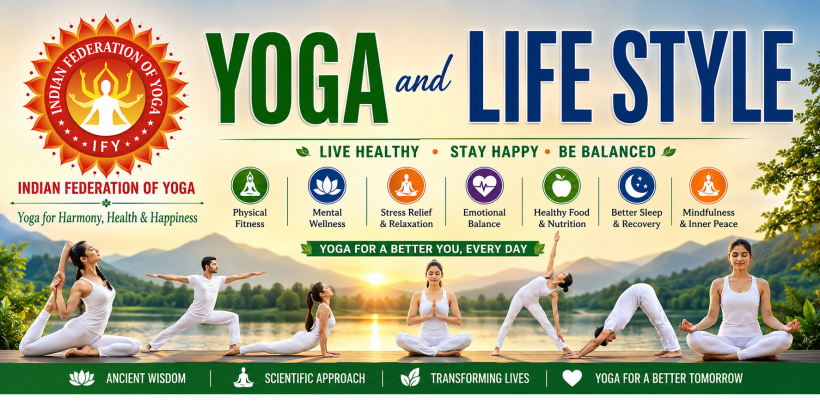
Yoga and Lifestyle: Transform Your Body, Mind and Daily Life with Indian Federation of Yoga
In today’s fast-changing world, maintaining a healthy and balanced lifestyle has become more important than ever. Busy schedules, long working hours, sedentary habits, excessive screen time, irregular sleep, unhealthy food choices and daily stress can affect our physical health, mental well-being and emotional balance. Yoga and lifestyle offer a holistic approach to creating healthier habits, improving self-awareness and developing a more balanced way of living.
Indian Federation of Yoga promotes the understanding of yoga as more than physical exercise. Yoga is a holistic discipline that can connect the body, breath, mind and awareness. By incorporating yoga, meditation, pranayama, mindfulness, healthy eating, physical activity, relaxation and positive lifestyle habits into everyday life, individuals can work toward greater wellness, vitality, flexibility, mental clarity and inner peace.
Whether you are searching for yoga for a healthy lifestyle, daily yoga routine, yoga for fitness, yoga for mental wellness, yoga for stress relief, yoga and meditation, yoga for weight management, yoga for flexibility, yoga for strength, yoga for better sleep, yoga for beginners, holistic wellness or mindful living, yoga can become a practical part of your everyday routine.
What Is a Healthy Yoga Lifestyle?
A healthy yoga lifestyle is not simply about performing yoga poses for a few minutes each day. It involves developing greater awareness of how we move, breathe, eat, rest, think and interact with the world around us.
Yoga encourages a balanced approach to life through practices such as:
- Yoga asanas
- Pranayama
- Meditation
- Mindfulness
- Relaxation
- Healthy eating
- Adequate sleep
- Physical activity
- Positive thinking
- Self-awareness
- Balanced daily routines
The philosophy of yoga provides a foundation for holistic living, while modern lifestyle practices can help individuals apply this awareness to their everyday lives.
At Indian Federation of Yoga, yoga can be approached as a comprehensive wellness discipline that supports the development of a healthy body, calm mind and balanced lifestyle.
Yoga for a Healthy Lifestyle
Yoga for a healthy lifestyle is suitable for people who want to introduce regular movement and mindfulness into their daily routine. Unlike exercise routines that focus only on physical fitness, yoga can combine physical postures with breathing, concentration and relaxation.
Regular yoga practice can help develop:
Strength + Flexibility + Balance + Mobility + Body Awareness + Mindfulness + Relaxation
A healthy lifestyle also requires adequate sleep, nutritious food, regular movement and appropriate healthcare. Yoga can complement these habits and become part of a sustainable wellness routine.
The goal is not to practise the most difficult yoga poses. The goal is to create consistency.
Even 15–30 minutes of daily yoga can become a meaningful habit when practiced appropriately and regularly.
Daily Yoga Routine for Wellness
Creating a daily yoga routine is one of the simplest ways to make yoga part of your lifestyle.
A beginner-friendly routine can include:
1. Breathing – 3 to 5 minutes
Begin by sitting comfortably and observing your natural breathing.
2. Warm-Up – 5 minutes
Practice gentle neck, shoulder, wrist, ankle and spinal movements.
3. Yoga Asanas – 10 to 20 minutes
Include comfortable standing, seated and gentle stretching postures.
4. Pranayama – 5 minutes
Practice suitable breathing exercises such as Nadi Shodhana, Anulom Vilom or gentle deep breathing.
5. Meditation – 5 minutes
Focus on your breath and develop present-moment awareness.
6. Savasana – 5 minutes
Finish with conscious relaxation.
This simple routine can be adapted for morning yoga, evening yoga, home yoga, office yoga and yoga for beginners.
Morning Yoga for a Healthy Lifestyle
Morning yoga can be an excellent way to begin the day with movement, awareness and positive intention.
A morning yoga routine may include:
- Gentle stretching
- Surya Namaskar
- Standing yoga poses
- Balance postures
- Pranayama
- Meditation
- Positive affirmations
Yoga in the morning can help establish a consistent wellness routine and encourage people to begin their day with mindful movement rather than immediately becoming immersed in digital devices and daily responsibilities.
A morning yoga practice can be particularly useful for people looking for yoga for energy, yoga for flexibility, yoga for focus, yoga for mental clarity and yoga for daily wellness.
Evening Yoga for Relaxation
After a busy day, evening yoga can provide an opportunity to slow down and transition toward relaxation.
A gentle evening routine can include:
- Child’s Pose
- Cat-Cow
- Gentle seated stretches
- Supine twists
- Slow breathing
- Meditation
- Savasana
- Yoga Nidra
People searching for yoga for relaxation, yoga for stress relief, yoga for better sleep and evening meditation can incorporate these practices into a calming nighttime routine.
The intensity of the practice should be adjusted according to individual needs and comfort.
Yoga and Physical Fitness
Yoga and fitness can work together to support a healthy lifestyle.
Yoga can involve strength, flexibility, balance, mobility and controlled movement. Different styles and practices can provide different physical challenges.
Yoga can support:
- Flexibility
- Strength
- Balance
- Mobility
- Posture awareness
- Core stability
- Body awareness
- Functional movement
Yoga for fitness can be practiced by beginners as well as experienced practitioners. A complete fitness lifestyle can also include walking, cardiovascular exercise, resistance training and other suitable physical activities.
Yoga does not need to replace every other form of exercise. Instead, it can become part of a balanced fitness and wellness programme.
Yoga for Flexibility and Mobility
One of the most popular reasons people begin practicing yoga is to improve flexibility.
Yoga for flexibility uses controlled movements and stretching postures to encourage greater range of motion. Regular practice can help individuals become more aware of their body's movement patterns.
Popular flexibility-focused practices include:
- Paschimottanasana
- Janu Sirsasana
- Baddha Konasana
- Trikonasana
- Adho Mukha Svanasana
- Bhujangasana
- Balasana
Flexibility should develop gradually. Yoga is not a competition, and forcing a posture can increase the risk of injury.
Yoga for Strength and Body Awareness
Yoga can also be used as a bodyweight strength practice.
Postures such as:
- Plank
- Chaturanga
- Virabhadrasana
- Phalakasana
- Utkatasana
- Adho Mukha Svanasana
- Navasana
can challenge different muscle groups depending on how they are practiced.
However, yoga should always be adapted to individual ability. Beginners should develop strength progressively rather than immediately attempting advanced postures.
Yoga, Meditation and Mindfulness
One of the most important connections in a healthy lifestyle is yoga and mindfulness.
Modern lifestyles often involve constant notifications, social media, multitasking and information overload. Mindfulness provides an opportunity to pause and become aware of the present moment.
Mindfulness meditation may involve focusing attention on:
- Breathing
- Body sensations
- Thoughts
- Emotions
- Sounds
- Present-moment awareness
Yoga can prepare the body for meditation through movement and conscious breathing.
The combination of yoga, meditation and mindfulness can become a powerful foundation for a balanced lifestyle.
Yoga for Stress Relief
Stress management is an important component of healthy living.
Yoga for stress relief can combine gentle movement, breathing exercises, meditation and relaxation.
A stress-relief routine may include:
Gentle Asanas → Pranayama → Meditation → Savasana
Practicing yoga regularly can provide dedicated time for relaxation and self-awareness.
For people searching for natural stress relief, stress management techniques, yoga for stress and anxiety, relaxation yoga, breathing exercises for stress and meditation for stress, yoga can be incorporated as part of a broader wellness lifestyle.
Persistent or severe mental-health symptoms should always receive appropriate professional attention.
Yoga for Mental Wellness
A healthy lifestyle involves both physical and mental well-being.
Yoga for mental wellness can encourage:
- Mindfulness
- Concentration
- Self-awareness
- Relaxation
- Mental clarity
- Emotional awareness
- Positive lifestyle habits
Meditation and breathing exercises can be combined with yoga asanas to create a complete mind-body practice.
At Indian Federation of Yoga, the holistic nature of yoga can be used to encourage a lifestyle that gives importance to physical health as well as mental and emotional wellness.
Yoga for Better Sleep
Sleep is an essential part of a healthy lifestyle.
People experiencing busy schedules, stress or excessive screen time may find it difficult to establish a relaxing nighttime routine.
Yoga for better sleep can include gentle stretching, breathing exercises, mindfulness, Savasana and Yoga Nidra.
A simple bedtime routine can be:
5 minutes gentle stretching → 5 minutes slow breathing → 5 minutes meditation → 5 minutes Savasana
The objective is to create a peaceful transition from daily activity toward rest.
Yoga and Healthy Eating
Yoga lifestyle practices can also encourage greater awareness of food choices.
A healthy lifestyle should focus on a balanced and nutritious diet appropriate for individual needs.
Mindful eating means paying attention to:
- Hunger and fullness
- Food quality
- Eating habits
- Portion awareness
- Eating slowly
- Enjoying food without unnecessary distractions
Yoga and healthy eating can work together as part of a broader approach to wellness.
Yoga should not be promoted as a substitute for nutritional or medical advice. Individuals with specific dietary requirements should consult an appropriately qualified professional.
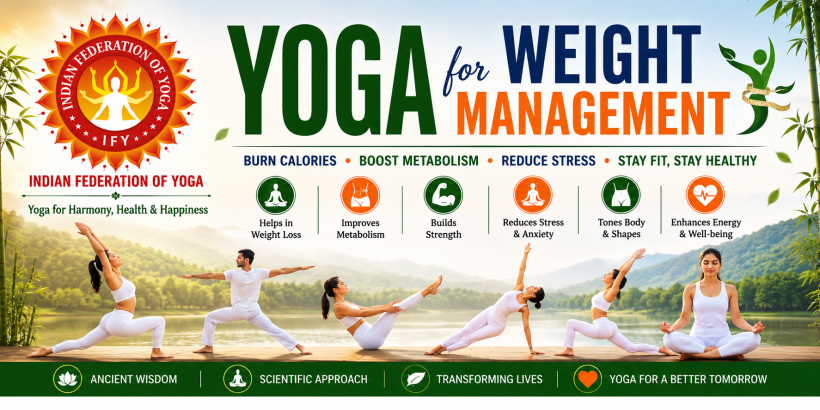
Yoga for Weight Management
Yoga for weight management is another popular search topic. Yoga can contribute to an active lifestyle through movement, strength, flexibility and body awareness.
However, sustainable weight management involves multiple factors, including:
- Nutrition
- Physical activity
- Sleep
- Stress management
- Lifestyle habits
- Individual health factors
Yoga can complement a healthy weight-management programme rather than being presented as a quick weight-loss solution.
Dynamic yoga practices can provide greater physical activity, while restorative yoga, meditation and mindfulness can support relaxation and healthy lifestyle awareness.
Yoga for Workplace Wellness
Modern professionals spend many hours sitting, using computers and managing deadlines.
Office yoga, workplace yoga and corporate yoga can introduce short periods of movement and relaxation during the working day.
Simple workplace practices include:
- Neck stretches
- Shoulder rotations
- Wrist exercises
- Seated spinal movements
- Breathing exercises
- Short meditation
- Mindfulness breaks
Corporate yoga and workplace wellness programmes can help organisations introduce healthier habits into the work environment.
Yoga for Students
Students can benefit from developing healthy lifestyle habits early in life.
Yoga for students can include asanas, breathing exercises, meditation and mindfulness.
A student wellness routine can encourage:
- Concentration
- Relaxation
- Physical activity
- Mindfulness
- Healthy routines
- Better body awareness
Yoga can be especially useful when combined with adequate sleep, healthy nutrition, outdoor activity and balanced study schedules.
Yoga for Seniors
Yoga can be adapted for older adults according to individual mobility, fitness and health considerations.
Yoga for seniors may include gentle movements, chair yoga, breathing exercises, balance practices and relaxation.
The emphasis should be on safe, comfortable movement rather than difficult postures.
People with health conditions should consult an appropriate healthcare professional before beginning a new physical activity programme.
Yoga for Beginners
You do not need to be flexible, strong or experienced to start yoga.
Yoga for beginners should focus on:
- Basic yoga postures
- Correct breathing
- Body awareness
- Safe alignment
- Relaxation
- Mindfulness
- Gradual progression
Beginners should learn from qualified instructors and avoid comparing themselves with advanced practitioners.
Yoga is a personal journey.
Yoga Lifestyle and Self-Care
Self-care and yoga can complement each other beautifully.
A healthy self-care routine may include:
Yoga + Meditation + Pranayama + Healthy Food + Sleep + Physical Activity + Relaxation + Positive Relationships
Self-care does not mean ignoring responsibilities. It means recognizing the importance of maintaining physical, mental and emotional well-being.
Regular yoga practice can create a dedicated period of time for yourself.
Yoga, Positive Thinking and Inner Peace
Yoga encourages self-awareness and mindful living. Through regular practice, individuals can develop greater awareness of their thoughts, emotions and physical sensations.
Yoga for inner peace can combine meditation, pranayama, relaxation and gentle asanas.
Inner peace does not mean that life will never contain challenges. Instead, it can involve developing healthier ways of responding to everyday situations.
Yoga and Holistic Wellness
Holistic wellness considers different aspects of health rather than focusing on one area.
A holistic yoga lifestyle can include:
Physical Wellness
Yoga, exercise, mobility and healthy movement.
Mental Wellness
Meditation, mindfulness and mental relaxation.
Emotional Wellness
Self-awareness, healthy relationships and emotional balance.
Lifestyle Wellness
Sleep, nutrition, daily routines and relaxation.
Social Wellness
Positive relationships and community connection.
Yoga can become a connecting practice that brings greater awareness to each of these areas.
Indian Federation of Yoga: Yoga for a Balanced Life
Indian Federation of Yoga supports the understanding of yoga as a comprehensive discipline that can be incorporated into modern lifestyles while respecting the traditional foundations of yoga.
Yoga is not simply about achieving difficult postures. It is about developing awareness, discipline, balance and a healthier relationship between body and mind.
Through yoga education, yoga practice, meditation, pranayama, mindfulness and wellness activities, individuals can explore different dimensions of a healthy and balanced lifestyle.
Whether you are a beginner searching for yoga for beginners, a professional looking for corporate yoga and workplace wellness, a student interested in yoga for concentration, a senior looking for gentle yoga, or someone seeking yoga for stress relief and holistic wellness, a suitable practice can be developed according to your individual needs.
Build Your Healthy Yoga Lifestyle Today
A healthier lifestyle does not have to begin with dramatic changes. Start with small, sustainable steps.
Wake up and take a few minutes to breathe consciously.
- Move your body.
- Practice yoga.
- Eat mindfully.
- Take breaks from screens.
- Spend time outdoors.
- Meditate.
- Sleep adequately.
- Create moments of silence.
- Develop awareness.
Over time, these small habits can become part of a sustainable yoga lifestyle.
Yoga and lifestyle are ultimately about balance.
- Balance between activity and rest.
- Balance between strength and flexibility.
- Balance between work and personal life.
- Balance between physical health and mental wellness.
- Balance between ambition and relaxation.
- Balance between movement and stillness.
With the guidance and approach of Indian Federation of Yoga, yoga can become more than an exercise routine—it can become a meaningful part of everyday living.
Whether your goal is better flexibility, improved fitness, stress management, mental clarity, relaxation, mindfulness, healthy living, emotional balance, better sleep, physical wellness or inner peace, begin with simple practices and build consistency.
Yoga for Life. Yoga for Wellness. Yoga for Balance. Yoga for a Better Lifestyle.
Indian Federation of Yoga — promoting the understanding of yoga, wellness, mindful living and a balanced approach to life.

Your email address will not be published. Required fields are marked *
Send Your Query